roundups
Best Indoor Plant Pots 2026 (Modern, Terracotta, and Ceramic Picks)
Best indoor plant pots compared: modern matte, terracotta, and ceramic picks for 2026. Top choices for every style and budget.
 Priya Anand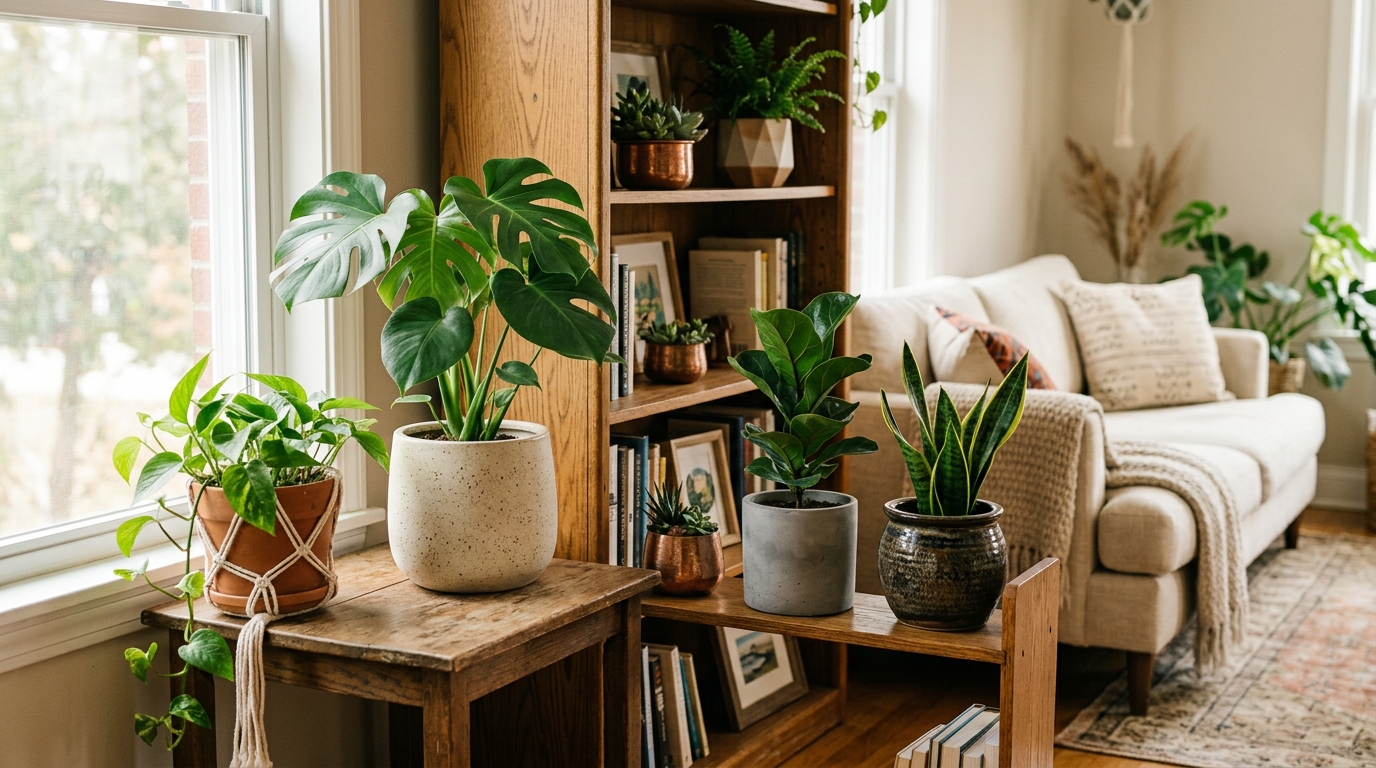
The pot you plant in matters as much as how often you water. Wrong material, wrong size, or no drainage hole and your plant is already in a fight it will probably lose. The market runs from $3 unglazed terracotta pots to $80 designer ceramics, and the useful distinctions aren’t primarily about price. They’re about drainage design, material breathability, and whether a pot’s proportions match the plant you’re putting in it.
The honest framing: most plants do best in unglazed terracotta or a matte plastic planter with a drainage hole, both of which are cheap. The upgrade argument for ceramics and designer matte pots is almost entirely aesthetic — they look better on shelves and plant stands than basic nursery pots. The practical sweet spot is matching a high-quality drainage pot (terracotta or plastic) to a well-chosen decorative cache pot, so you get both looks and plant health without compromise. For buyers who want a single pot that does both, La Jolie Muse and HOMENOTE are the right answers at two price points.
What actually matters when choosing indoor plant pots
Three factors determine whether a pot keeps your plants healthy:
1. Drainage hole (required for 95% of plants). Without a drainage hole, water accumulates at the pot’s base, soil becomes anaerobic, and roots rot. This is the leading cause of houseplant death. Some plants (certain bog species, lucky bamboo) tolerate or prefer no drainage, but for pothos, monsteras, ferns, ficus, succulents, herbs, and the vast majority of common houseplants, a drainage hole is not optional. Pots without drainage holes can still be useful as cache pots — decorative outers that hold a practical plastic or terracotta nursery pot inside.
2. Material and breathability. Unglazed terracotta is porous: water evaporates through the walls, soil dries faster between waterings, and oxygen reaches roots more readily. This makes it far more forgiving for overwatering-prone plants and succulents. Glazed ceramic, plastic, and fiberglass don’t breathe — the pot retains moisture longer, which is correct for moisture-loving plants (ferns, calatheas) but dangerous for succulents or plants in low light. Plastic nursery pots are light, cheap, and functional; they just don’t look intentional on a shelf.
3. Size relative to root ball. Going up too many sizes is as common a mistake as not repotting at all. A 4-inch plant dropped into a 10-inch pot has a huge volume of soil around the roots that stays wet for weeks, starving roots of oxygen and causing rot. The standard rule: repot to the next size up — roughly 1-2 inches wider in diameter than the current root ball. For fast-growing species (pothos, monstera, peace lily), moving up 2 sizes is occasionally appropriate, but only when roots are visibly circling or emerging from drainage holes.
Quick comparison
| Product | Best for | Rating | Notes | |
|---|---|---|---|---|
| La Jolie Muse Plant Pots | best overall; modern matte look with drainage and saucer | ★★★★★ | $15–40 for sets. Concrete-look finish, drainage hole + saucer included. Multiple sizes. Best value for style. | Check price |
| Classic Unglazed Terracotta Pots | best for plant health; succulents, herbs, overwatering-prone plants | ★★★★★ | $8–30 for sets. Porous walls, drainage hole. The most forgiving pot material available. | Check price |
| HOMENOTE Matte Plant Pots | best minimalist set; clean modern look at a low per-pot price | ★★★★★ | $20–35 for sets of 5-6. Matte white or grey, drainage + saucer. Excellent shelf aesthetics. | Check price |
| Mkono Large Planter Pot | best large statement planter for monstera, fiddle-leaf fig, bird of paradise | ★★★★★ | $25–55 by size. Modern geometric shape, matte finish, drainage. Best single large-plant pot. | Check price |
| POTEY Ceramic Succulent Pots Set | best small decorative set for succulents, herbs, and small plants | ★★★★☆ | $20–35 for set of 6. Small glazed ceramic pots with drainage + saucers. Best for desktop plants. | Check price |
| Plastic Nursery Pots (Set) | best propagation and repotting pots; ideal for cache pot method | ★★★★★ | $10–20 for set of 10-20. Lightweight, cheap, drainage slits. Use inside decorative cache pots. | Check price |
The picks
Best overall: La Jolie Muse Plant Pots
Best for buyers who want a stylish modern planter with genuine drainage — the best single answer for most indoor plant owners
La Jolie Muse Indoor Plant Pots with Drainage
La Jolie Muse makes the most consistently well-reviewed modern plant pots at a price that doesn't require deliberation. The concrete-look matte finish has the appearance of poured stone at a fraction of the weight — it looks intentional on a shelf, sideboard, or window ledge without looking like an obvious Amazon find. Every pot in their lineup ships with a matching drainage saucer and a drainage hole pre-drilled. The resin construction means it's lightweight enough to move even when filled with soil, and frost-resistant enough to transition outdoors in summer. Sets run 4-6 inches to 10-12 inches; their most popular sets include multiple sizes for a coordinated shelf display. At $15-40 per set depending on size, La Jolie Muse delivers the aesthetics of a boutique plant shop at a price closer to a basic garden center pot. For buyers who want one brand to cover their entire plant collection's pot needs, this is the right default.
★★★★★ 4.7 · 9,200 reviews
Check current price on Amazon→Pros
- Concrete-look matte finish looks genuinely premium on shelves and plant stands
- Drainage hole + matching saucer included in every size — no DIY drilling required
- Lightweight resin construction; large pots are moveable even when planted
- Available across the full size range from small herb pots to large 10-12 inch statement pots
- Sets of multiple sizes allow a coordinated look across a whole plant collection
- Frost-resistant; works indoors and on covered patios without cracking seasonally
Cons
- Resin is not breathable like terracotta — not the right choice for succulents or cacti in low-light conditions
- The concrete look is convincing but not actual concrete; close inspection reveals the plastic construction
- Saucers are shallow and will overflow quickly under heavy watering — empty regularly
- Color options are limited to neutral tones; not the pick if you want bold or colorful plant pots
Best for plant health: Unglazed Terracotta Pots
Best for any plants susceptible to overwatering — succulents, cacti, herbs, fiddle-leaf figs, orchids, and beginners who tend to overwater
Classic Unglazed Terracotta Plant Pots with Drainage
Unglazed terracotta is the gold standard for plant health, and no decorative trend has displaced it. The porous clay walls allow water to evaporate from the sides as well as the drainage hole, which dries the growing medium faster and delivers oxygen to roots between waterings. This natural buffering is the reason plants in terracotta forgive overwatering that would rot the same plant in a sealed ceramic or plastic pot. Terracotta is also pH-neutral, salt-accumulating in a visible way (the white crust that appears on the exterior is fertilizer salt — a useful visual indicator that it's time to flush the soil), and completely safe for edibles. Unglazed pots run from $1-3 each in smaller sizes to $15-25 for large statement sizes, making them the most affordable useful pot material available. The aesthetic is warm and natural; it works in any style of interior but particularly with boho, Mediterranean, and natural-material decor.
★★★★★ 4.6 · 7,800 reviews
Check current price on Amazon→Pros
- Breathable porous walls dry soil faster and deliver oxygen to roots — the most forgiving pot for overwatering
- Ideal for succulents, cacti, orchids, herbs, and any plant susceptible to root rot
- Salt accumulation on exterior walls is a visible fertilizer-flush reminder — useful diagnostic tool
- Natural warm aesthetic works with any interior style; improves with age as the clay develops patina
- The most affordable functional pot material — sets of 10 run $10-20 and last indefinitely
- pH-neutral and safe for edibles; no off-gassing from plastic or glazes
Cons
- Moisture-loving plants (ferns, calatheas, maidenhair) dry out too fast in terracotta — use glazed ceramic or plastic for these
- Heavy when large; a 12-inch terracotta pot filled with wet soil can weigh 20+ lbs
- Breakable if dropped; not a good choice where pots get knocked over frequently
- White salt crust requires occasional scrubbing if aesthetics matter — it's harmless but visible
- Standard terracotta look is not everyone's aesthetic; it doesn't suit ultra-modern or minimalist interiors
Best minimalist set: HOMENOTE Matte Plant Pots
Best for shelf styling with a clean modern aesthetic — the best value set for outfitting multiple plants at once
HOMENOTE Matte Plant Pots with Drainage and Saucers
HOMENOTE's sets of 5-6 matte planters in graduated sizes are the most common answer for renters and first-time plant owners who want a coordinated look across an entire plant shelf without a large investment. The matte white and grey finishes photograph well and blend into modern and Scandinavian interiors without competing with the plants. Each pot includes a drainage hole and a matching shallow saucer. The plastic construction is lightweight — a set of 5 including 4, 5, 6, 7, and 8-inch pots typically ships for under $30, making the per-pot cost under $6. At that price, it's reasonable to buy two sets to cover every plant in a one-bedroom apartment. The limitation is the same as all non-porous plastics: moisture-loving plants thrive, but succulents and cacti need more breathability. For the typical houseplant collection — pothos, philodendron, peace lily, snake plant, ZZ plant — HOMENOTE covers the full range efficiently.
★★★★★ 4.5 · 6,400 reviews
Check current price on Amazon→Pros
- Sets of 5-6 graduated sizes cover an entire plant collection for under $30
- Matte white/grey finish is clean and modern; works with any shelf or plant stand
- Drainage hole + saucer included in every size; no improvisation needed
- Lightweight plastic: easy to move even large pots between rooms or to a sink for watering
- Per-pot cost under $6 makes it practical to re-pot every plant at once
Cons
- Plastic is not breathable: not appropriate for succulents, cacti, or any plant that needs fast soil drying
- Thin plastic construction; larger sizes can flex or bow slightly when filled
- Saucers are narrow — overflow onto surfaces if you water generously
- Matte finish can show watermarks and dust; wipe down regularly for best appearance
Best large statement planter: Mkono Large Indoor Planter
Best for large specimen plants — monstera deliciosa, fiddle-leaf fig, bird of paradise, olive tree — that need a serious floor-standing planter
Mkono Large Indoor Planter Pot with Drainage
Statement plants need statement pots, and the Mkono large planter is the right answer at the right price for large specimens that will anchor a living room or bedroom corner. The modern geometric shape and matte finish look substantial in a room — not like an oversized nursery pot. The drainage hole is pre-drilled and the base includes a built-in drainage tray, which matters for a floor planter that's difficult to move to a sink for watering. At $25-55 depending on size (the 10-inch and 12-inch are the most popular for indoor specimens), it's affordable enough that swapping between plants or design changes doesn't hurt. For plants like monstera that need repotting every 1-2 years into progressively larger containers, a pot in this price range makes that cycle practical. The resin construction keeps weight manageable — a 12-inch pot with soil and a large monstera is heavy regardless of pot material, but resin is 30-40% lighter than a comparable ceramic.
★★★★★ 4.5 · 3,700 reviews
Check current price on Amazon→Pros
- Modern geometric shape looks deliberate as a floor planter — not an oversized nursery container
- Drainage hole + built-in base tray: practical for large plants that are difficult to carry to a sink
- Resin construction is 30-40% lighter than ceramic equivalents at the same size
- Available in 10 and 12-inch sizes appropriate for large specimen plants
- Matte finish doesn't show dust or water marks as readily as glossy ceramic
Cons
- Not breathable: the same overwatering caveats as any sealed plastic or resin planter apply
- Built-in drainage tray is shallow; in heavy watering sessions it will overflow
- Large resin pots can flex slightly when you move them; support from the base, not the rim
- Color options are limited to neutrals — not the pick if you want color
Best for small plants and desktops: POTEY Ceramic Succulent Pots Set
Best for desktop plants, succulents, small cacti, herbs, and propagation cuttings that need a proper decorative pot under 4 inches
POTEY Ceramic Succulent Pots with Drainage Holes and Saucers
Small ceramic pots with drainage holes are the hardest category to find well at a reasonable price. The POTEY set of 6 fills that gap: small glazed ceramic pots (typically 3-4 inch diameter) with drainage holes and matching ceramic saucers, sold as a coordinated set. The glazed ceramic construction looks more premium than plastic at this size — the weight and finish of real ceramic versus matte plastic is apparent when the pot sits on a desk or windowsill next to a laptop or kitchen appliance. Succulents and cacti in small ceramic glazed pots do need careful watering (glazed ceramic retains moisture longer than terracotta), but the hole allows excess to drain and the small soil volume dries adequately. At $20-35 per set of 6, the per-pot cost is reasonable for real ceramic. For small propagation cuttings, single-stem herbs on a windowsill, or a desktop arrangement of small succulents, this is the most complete-feeling set in the category.
★★★★☆ 4.4 · 5,100 reviews
Check current price on Amazon→Pros
- Real glazed ceramic: heavier, more premium feel than plastic pots at the same size
- Drainage holes + ceramic saucers included — complete and ready to plant without extras
- Set of 6 covers a full windowsill or desk arrangement in a coordinated look
- Small size (3-4 inches) is right for succulents, cacti, herbs, and rooted cuttings
- Clean neutral glazed finish works in any interior style
Cons
- Glazed ceramic retains moisture longer than terracotta — water succulents more conservatively than in terracotta pots
- Ceramic is breakable; not appropriate where pots get knocked over (high-traffic areas, homes with cats)
- Saucers are ceramic, not plastic — they can crack if dropped
- Small size is the limitation: not appropriate for any plant larger than a 3-4 inch root ball
What to skip
Decorative pots without drainage holes used as primary planters. Many attractive pots — handmade ceramics, woven baskets, concrete planters — have no drainage hole. Using them as primary planters leads to root rot for all but the most drought-tolerant plants. Use them as cache pots (decorative outers with a nursery pot inside) instead. Place a plastic or terracotta nursery pot with drainage inside the decorative pot, and lift the inner pot to water at a sink. This is the correct approach and it’s better anyway: you can swap the plant seasonally without repotting, and the decorative pot stays pristine.
Oversized pots for small plants. Moving a 3-inch plant into a 10-inch pot is the most common repotting mistake. The large soil volume around the small root ball stays wet for weeks, depriving roots of oxygen. Repot in increments — 1-2 inches larger in diameter at a time. If a plant came in a 4-inch nursery pot, the next pot is 5-6 inches, not 10.
Saucers too shallow to hold drainage. Budget pots often include a token 1/4-inch saucer that overflows with the first watering. Look for saucers at least 1 inch deep. Alternatively, place a flat tray under a pot cluster rather than relying on individual shallow saucers.
“Self-draining” pots with no actual drainage. Some listings describe double-walled pots as “self-draining” when there’s actually no exit for excess water — it just pools in the inner chamber out of sight. This is the most misleading category on Amazon. The only drainage that counts is an opening that allows excess water to leave the pot entirely.
FAQ
Frequently asked questions
Do all indoor plants need pots with drainage holes?
How do I know when to repot?
Terracotta vs ceramic — which is better for my plants?
What size pot does my plant need?
Can I use a pot without a drainage hole if I add rocks or gravel at the bottom?
What is the cache pot method and how do I use it?
How do I clean plant pots between uses?
Bottom line
Best overall: La Jolie Muse Plant Pots — modern matte aesthetic with drainage and saucer included at a price that makes outfitting a whole collection practical. Best for plant health: unglazed terracotta pots — breathable walls, the most forgiving material for overwatering-prone plants and succulents, and the cheapest option that actually improves plant outcomes. Best minimalist set: HOMENOTE Matte Pots — clean Scandinavian-look graduated sets that cover every shelf plant for under $30. Best large statement planter: Mkono Large Planter — the right floor pot for monstera, fiddle-leaf fig, and bird of paradise without the cost of designer ceramics.
The single most important rule: drainage holes. Everything else — material, size, aesthetics — matters far less than that opening at the bottom of the pot.
For more indoor plant setup ideas, see best self-watering planters for reservoir-based systems that automate watering entirely, best plant stands to display your pots at the right height and in the right light, or best soil meters to take the guesswork out of when to water each pot.