roundups
Best Self-Watering Planters 2026
Best self-watering planters compared: windowsill herb pots to large raised beds. Top picks for indoor plants, herbs, and vegetables.
 Priya Anand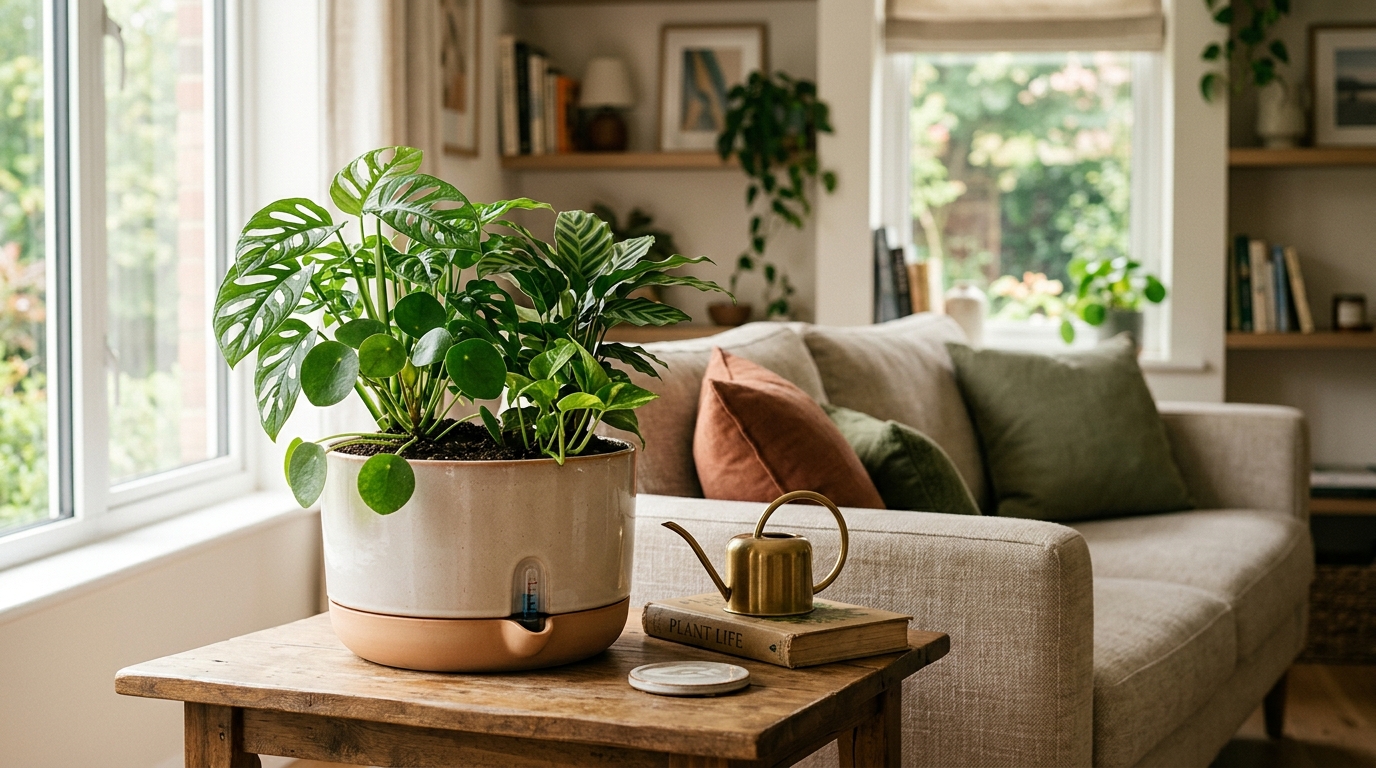
Self-watering planters solve the most common way houseplants die: inconsistent watering. A built-in reservoir at the base stores water; the growing medium wicks moisture upward to roots on demand. Instead of guessing when to water — or drowning a pothos on Monday then forgetting it for three weeks — the plant takes what it needs, when it needs it. The reservoir typically runs 1–3 weeks between refills indoors, longer in cool or low-light conditions.
The market runs from $12 windowsill herb pots to $130 Lechuza fiberglass statement planters. The meaningful split isn’t price — it’s whether the reservoir uses true sub-irrigation (soil separated from standing water by an air gap and wicking column) or cheap drainage-tray designs where soil sits directly in stagnant water and roots rot within weeks. Every planter on this list uses genuine sub-irrigation or a proven wicking system. The ones to skip mostly don’t.
How self-watering planters actually work
The term “self-watering” covers three very different designs, and only two of them work long-term:
1. True sub-irrigation (the right design). The planter has two compartments: an upper growing chamber and a lower reservoir, separated by a platform with an air gap. A wicking column or insert bridges the gap — the growing medium draws moisture up from the column by capillary action. Critically, most roots grow in the upper chamber and never touch standing water, so they get moisture and oxygen simultaneously. The reservoir has a fill tube (for adding water from the top without disturbing the plant) and a float indicator that shows the level at a glance. Lechuza, EarthBox, and Santino Ikon all use this design.
2. Wick-based systems (acceptable for smaller pots). Some smaller self-watering pots use a cotton or nylon wick that runs from the reservoir directly into the soil. This works well for herbs and small plants with modest root systems. The Aquaphoric herb planter uses this approach successfully. The limitation: as root mass expands, roots can follow the wick into the reservoir and sit in standing water — fine for herbs you harvest frequently, but a problem for long-lived perennial plants.
3. Drainage-tray designs (avoid). This is not sub-irrigation. The pot has drainage holes and sits in a saucer that catches runoff. The plant can absorb from the saucer when it runs dry, but roots routinely sit in standing water and rot over 2–6 months. Most budget “self-watering” listings on Amazon are this design. They cause exactly the root rot they claim to prevent.
Quick comparison
| Product | Best for | Rating | Notes | |
|---|---|---|---|---|
| Lechuza Classico LS | best overall; premium sub-irrigation for indoor plants | ★★★★★ | $55–130 by size. German-engineered, accurate water indicator, 10+ year lifespan. True sub-irrigation. | Check price |
| EarthBox Original Container Garden Kit | best for vegetables; high-yield outdoor/patio growing | ★★★★★ | $35–65. 3-gallon reservoir, fill tube, aeration screen. Proven with tomatoes, peppers, herbs. | Check price |
| Aquaphoric Self-Watering Herb Garden Planter | best windowsill herb planter for kitchen use | ★★★★★ | $20–35. 4-pot tray, wicking system, translucent reservoir. Great kitchen countertop fit. | Check price |
| Santino Ikon Planter | best value; Lechuza-quality sub-irrigation at half the price | ★★★★★ | $20–55 by size. Polish-made sub-irrigation, float indicator, multiple sizes and colors. | Check price |
| Mkono Self-Watering Pot | best minimalist/decorative pick for small plants | ★★★★☆ | $15–30. Clean ceramic look, wick-based system. Suited for small pothos, succulents, herbs. | Check price |
The picks
Best overall: Lechuza Classico LS
Best for indoor plant owners who want the best-engineered self-watering planter available — a buy-once, use-forever pot for serious houseplant growers
Lechuza Classico LS Self-Watering Planter
Lechuza is the benchmark that other self-watering planters are compared against. Made in Germany from UV-stable polypropylene, the Classico LS uses a purpose-designed sub-irrigation insert: a wicking column bridges the reservoir and upper growing chamber, an air gap prevents root saturation, and a float-type water level indicator reads clearly from across the room. The reservoir is sized appropriately to the planter — the 21cm model holds 0.7 liters, the 50cm holds 3.5 liters — and a fill tube at the top means you never need to lift or move the plant to water it. Lechuza also makes a proprietary inorganic growing medium (Pon) that pairs with sub-irrigation better than standard potting soil: it wicks more consistently and doesn't compact over time. Standard potting mix works fine too. At $55–130 depending on size, Lechuza costs more than any other option here. The price is justified if you care about your plants and want a planter built to last a decade.
★★★★★ 4.8 · 3,200 reviews
Check current price on Amazon→Pros
- True sub-irrigation with air gap and wicking column — the most root-friendly reservoir design available
- Accurate float-type water level indicator reads clearly without guessing or probing the soil
- Fill tube at the top — water without moving or disturbing the plant
- UV-stable, frost-resistant polypropylene: will not crack, yellow, or warp over years of indoor use
- Available in 7 sizes from 15cm to 50cm, and a wide range of matte and gloss color finishes
- Compatible with Lechuza Pon inorganic medium for even better long-term sub-irrigation performance
Cons
- $55–130 is the highest price in the category — not an impulse buy
- Larger sizes are very heavy when filled with soil and water; choose final placement before filling
- Lechuza Pon growing medium costs extra and is not stocked at most garden centers
- The float indicator can stick in hard water conditions; flush reservoir annually in affected areas
Best for vegetables: EarthBox Original Container Garden Kit
Best for vegetable gardeners who want the most proven sub-irrigation grow system for tomatoes, peppers, herbs, and leafy greens
EarthBox Original Container Garden Kit
EarthBox has been producing the same basic design since 1994, and the results back it up. A rectangular growing container holds a full bag of potting mix on top of an aeration screen that separates the growing medium from a 3-gallon reservoir below. A fill tube delivers water directly to the reservoir — you fill it from the top even when plants are fully grown. A fertilizer strip lays on top of the mix under a mulch cover, keeping nutrients near the surface where they dissolve gradually through the season. This eliminates the guesswork of fertilizing schedule. EarthBox documents higher yields than in-ground beds for tomatoes and peppers in head-to-head tests — which holds up in practice because the reservoir delivers consistent moisture during peak summer heat and the mulch cover prevents evaporation. At $35–65, it's the most practical choice for anyone growing edibles who wants to remove inconsistent watering as a variable. Best used on a patio or in a greenhouse, though it works in very large indoor spaces with adequate light.
★★★★★ 4.6 · 6,800 reviews
Check current price on Amazon→Pros
- 3-gallon reservoir handles high daily water demand from tomatoes and peppers without daily filling
- Aeration screen provides true sub-irrigation — roots stay healthy even during peak summer heat
- Fill tube makes refilling a 10-second task even when the canopy is full
- Fertilizer strip method simplifies feeding schedule for the entire growing season
- Proven yields: documented performance with tomatoes, peppers, cucumbers, and compact greens
- Durable construction; EarthBox kits routinely last 10+ growing seasons with winter storage
Cons
- Large footprint (29×13.5 inches) is designed for outdoor/patio use — limited indoor placement
- Requires a full bag of potting mix to fill; not appropriate for a single herb pot or small plant
- Mulch cover and fertilizer strip add setup steps over simply filling a planter with soil
- EarthBox branded refill kits (mulch, fertilizer) are an annual consumable cost to factor in
Best for kitchen herbs: Aquaphoric Self-Watering Herb Garden Planter
Best for kitchen herb growers who want a windowsill-friendly, attractive planter that stretches herb watering to once a week or less
Aquaphoric Self-Watering Herb Garden Planter
Aquaphoric's herb planter is a windowsill-length tray with four individual growing pots, each positioned above a shared water reservoir. Cotton wicks in each pot draw water from the reservoir as the growing medium dries, delivering consistent moisture to herb roots. The reservoir is translucent, so water level is visible without removing pots or checking underneath — a small detail that matters a lot in day-to-day use. The overall design fits a standard kitchen windowsill without using counter space, and the clean aesthetic looks intentional in a modern kitchen rather than improvised. At $20–35, it's the most practical dedicated herb planter available. The wick-based design is the right choice for herbs specifically (shallow root systems, regular harvesting that limits root expansion) and keeps basil, parsley, mint, and thyme in continuous good health rather than the decline that follows erratic watering.
★★★★★ 4.5 · 4,100 reviews
Check current price on Amazon→Pros
- Four-pot design holds a complete kitchen herb garden in one windowsill-width footprint
- Translucent reservoir lets you see water level at a glance without removing pots
- Wicking system delivers consistent moisture to herbs — prevents both overwatering and drought stress
- Clean aesthetic fits modern kitchen decor without looking like garden equipment
- No tools or assembly; ready to plant within minutes of unboxing
Cons
- Wick-based (not true sub-irrigation) — correct for herbs, not ideal for large permanent plants
- Individual pots are small; suited for herbs, not for peppers, tomatoes, or root vegetables
- Cotton wicks may need replacing after 12–18 months of continuous use
- Faster-growing herbs (basil) draw the shared reservoir down faster than slower neighbors
Best value: Santino Ikon Planter
Best for buyers who want genuine sub-irrigation quality without paying Lechuza prices — the best value self-watering planter available
Santino Ikon Self-Watering Planter
Santino is a Polish planter brand that engineers genuine sub-irrigation systems at 40–50% of Lechuza's price. The Ikon uses a multi-chamber reservoir, a proper wicking column, and a float indicator that reads accurately — the same engineering approach as Lechuza, built to a slightly lower material standard. The plastic is lighter than Lechuza (fewer color options, matte-only finish), but the sub-irrigation mechanism is sound and the float indicator works correctly. Available from 13cm to 40cm diameter in a range of colors, the Santino Ikon suits pothos, peace lilies, calatheas, ferns, and any plant that prefers consistent moisture over dry-wet watering cycles. For growers who want a self-watering planter that actually works — not a drainage-tray approximation — but find Lechuza pricing difficult to justify across multiple plants, Santino is the right answer.
★★★★★ 4.6 · 1,800 reviews
Check current price on Amazon→Pros
- True sub-irrigation with wicking column and air gap — prevents root rot correctly
- Float-type water level indicator reads accurately — same principle as Lechuza at half the price
- Available from 13cm to 40cm; covers small herbs through large indoor specimen plants
- Works with standard potting mix — no proprietary growing medium required
- Excellent value for outfitting multiple plants across a home without Lechuza pricing
Cons
- Lighter plastic construction than Lechuza — noticeably less premium in feel
- Fewer color and finish options than Lechuza's full lineup
- Less widely stocked; typically available only through Amazon in the US rather than local garden centers
- Indicator float can be stiff on the smallest sizes — check manually when first setting up
Best minimalist: Mkono Self-Watering Pot
For a single small plant on a shelf — a pothos cutting, a trailing string of pearls, or a small succulent — the Mkono self-watering pot delivers a clean ceramic-look aesthetic with a simple wick-based reservoir. At $15–30, it does what it claims for plants with small root systems and doesn’t require an indicator, a fill tube, or any engineering knowledge. The wick needs replacing every 12–18 months of continuous use. For larger plants or long-term permanent placement, the Santino or Lechuza is a better investment. For a small plant on a nightstand where you want something that looks like a ceramics-store purchase and stays watered while you travel, Mkono is exactly right.
What to skip
Drainage-tray “self-watering” pots. A pot with drainage holes sitting in a saucer is not a self-watering planter. Soil sits in the runoff water, roots rot, and the plant declines over 2–6 months. This design represents the majority of budget “self-watering” listings under $15 on Amazon. If a planter doesn’t describe an internal reservoir, a fill tube, or a water level indicator — and particularly if it just shows a pot above a separate saucer — it’s a drainage-tray design.
Very cheap reservoir pots with no level indicator. A hidden reservoir with no way to check the water level forces you to guess, lift the planter, or probe the soil — defeating the convenience benefit entirely. Any self-watering planter worth buying has some means of checking the reservoir without moving the plant.
Oversize containers for small root systems. A 50cm Lechuza for a 4-inch pothos keeps far too much soil wet for too long, even with proper sub-irrigation. Large soil volume around a small root system stays saturated for weeks and creates anaerobic conditions that sub-irrigation alone can’t prevent. Match planter diameter to plant size: a 6-inch plant goes in an 8–10-inch planter, not a 15-inch one.
Terra-cotta “self-watering” inserts (ollas). Buried clay ollas deliver water by slow seepage and work well in outdoor raised beds. They’re mislabeled as self-watering planters in some Amazon listings and are not the same product as a sub-irrigation planter.
FAQ
Frequently asked questions
How long can a self-watering planter go without being refilled?
Can I use regular potting mix in a self-watering planter?
Do self-watering planters work for succulents and cacti?
Will the reservoir cause root rot in my plants?
Which self-watering planter works best for peace lilies and calatheas?
Can self-watering planters be used outdoors?
Lechuza vs Santino Ikon — which should I buy?
Bottom line
Best overall: Lechuza Classico LS — the benchmark self-watering planter, built to last a decade. Best value: Santino Ikon — the same sub-irrigation principle at half the price. Best for vegetables: EarthBox Original — the most proven container growing system for tomatoes, peppers, and high-demand edibles. Best for kitchen herbs: Aquaphoric Herb Garden Planter — the cleanest, most practical windowsill herb setup available.
Self-watering planters are a genuine upgrade for anyone who travels frequently, forgets to water, or has killed more plants than they’d like to admit. The key is choosing a planter with a true internal reservoir and an air gap — not a saucer that collects drainage runoff.
For more indoor growing ideas, see best indoor herb gardens for soil-pot herb growing near a window, best smart gardens for hydroponic countertop pod systems, or best grow lights to supplement low-light windowsill growing.