guides
How to Grow Basil Indoors: Complete Growing Guide
Grow basil indoors year-round with the right light, soil, and pinching technique. Step-by-step guide for windowsill and grow-light setups.
 Priya Anand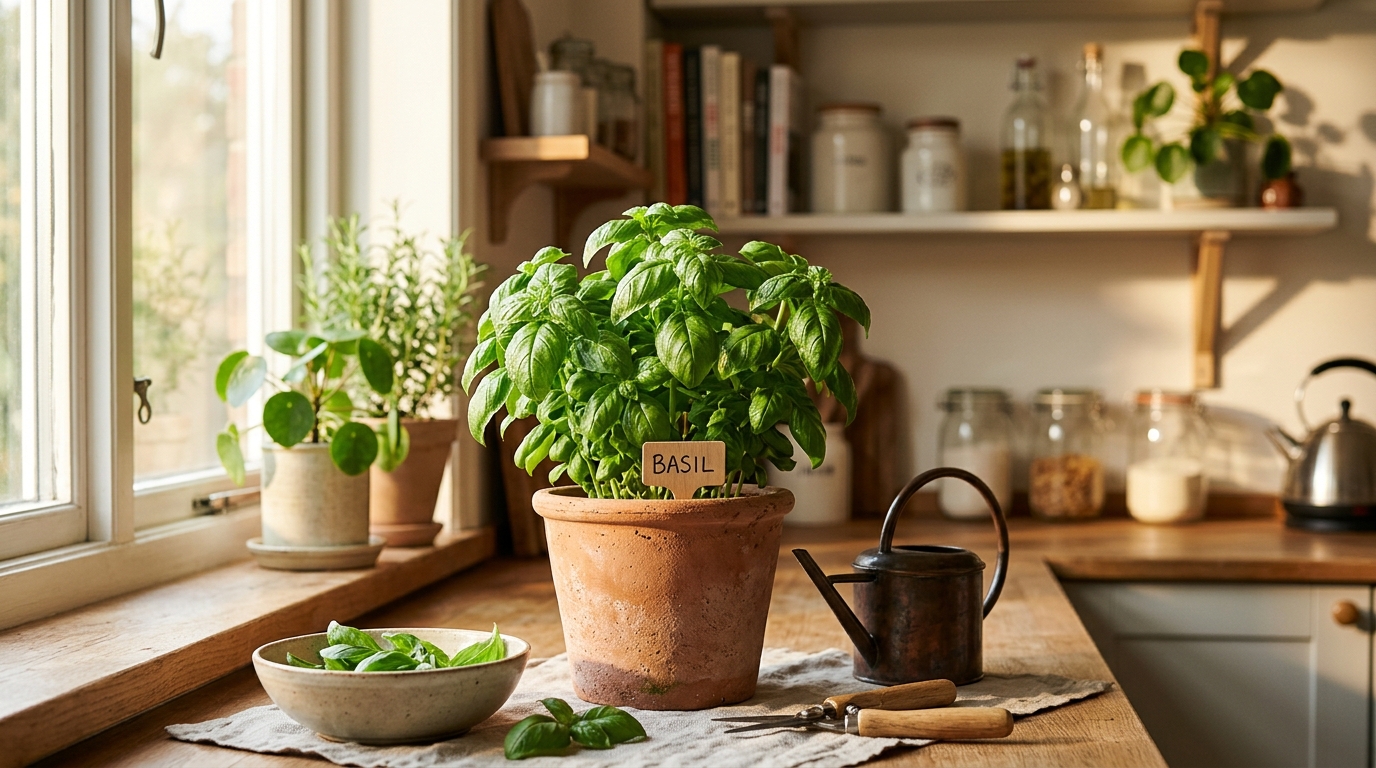
Basil grows indoors successfully on a south-facing windowsill with at least 6 hours of direct sun, or under a full-spectrum grow light running 14–16 hours per day. The biggest keys are keeping soil moist (not wet), maintaining temperatures above 65°F, and pinching flower buds the moment they appear to keep the plant producing leaves for months rather than weeks.
Basil is the most challenging common culinary herb to grow indoors, and also the most rewarding. A grocery store bunch costs $3–5 and wilts within days. A single healthy basil plant on your kitchen counter supplies fresh leaves through months of cooking — pestos, Caprese salads, pasta sauces, and summer cocktails — from a $4 seed packet or a $6 nursery transplant. The failure rate is high among beginners because basil has two specific requirements that differ from most other herbs: it needs significantly more light than most windows provide, and it is extremely cold-sensitive, reacting badly to temperatures below 60°F or cold drafts near windows in winter. Get those two factors right and everything else falls into place.
Is indoor basil worth the effort?
Basil is classified as an annual herb, meaning it completes its full life cycle — germinate, grow, flower, set seed, die — in a single growing season. Outdoors, that cycle runs roughly from late spring to first frost, giving you 4–6 months of harvests. Indoors with the right setup, you can stretch that cycle significantly by preventing flowering and maintaining warm temperatures, getting 6–9 months of useful production from a single plant. You can also run overlapping plants started from seed or cuttings to maintain a continuous supply year-round.
The practical math: a $4 seed packet contains 50–100 seeds. A quality grow light costs $25–45 and serves multiple plants over several years. Ongoing costs are minimal — electricity for the light and occasional liquid fertilizer. Compare that to $3–5 per bunch at the grocery store, and indoor basil pays for itself within a single season of regular use.
What you need to get started
| Product | Best for | Rating | Notes | |
|---|---|---|---|---|
| Full-spectrum LED grow light | Supplementing low window light or growing without a south-facing window | ★★★★★ | Run 14-16 hours daily for basil. Position 4-6 inches above the canopy. A $25-45 strip or clip-on light covers 2-4 pots easily. | Check price |
| Terracotta pots with drainage holes (4-6 inch) | The single best container choice for basil | ★★★★★ | Unglazed terracotta wicks excess moisture and prevents root rot. Use 4-inch pots for single seedlings, 6-inch for large established plants. | Check price |
| Cactus and herb potting mix | Preventing soggy soil that rots basil roots | ★★★★★ | Or mix standard potting soil 2:1 with perlite. Faster drainage means more forgiving watering. Avoid moisture-control formulas. | Check price |
| Basil seeds or nursery starts | Starting your basil grow from scratch | ★★★★★ | Genovese is the classic culinary variety. Seeds germinate in 5-10 days at 70-80°F. Nursery transplants are ready to harvest in 2-3 weeks. | Check price |
| Liquid fertilizer balanced 5-5-5 or 10-10-10 | Feeding basil every 2-3 weeks during active growth | ★★★★★ | Use half the recommended dose. FoxFarm Grow Big and similar herb fertilizers work well. Overfertilizing reduces leaf flavor. | Check price |
| Outlet timer for grow lights | Automating a consistent 14-16 hour light schedule | ★★★★★ | A $10-15 basic timer eliminates guesswork. Consistent photoperiod produces more even basil growth than manual switching. | Check price |
Step 1: Choose the right basil variety
Not all basil behaves the same indoors. Genovese (Italian sweet basil) is the most common and most forgiving variety — large leaves, classic flavor, and the variety used for pesto. It is the right starting point for most indoor growers.
Other varieties worth considering:
- Thai basil — smaller leaves, stronger anise flavor, more heat-tolerant than Genovese, excellent on south-facing windowsills in warm rooms
- Lemon basil — compact growth habit, citrus flavor, well-suited to smaller pots and moderate light
- Purple or dark opal basil — beautiful appearance, slightly lower yield than Genovese, but the compact habit suits indoor spaces
- Greek or spicy globe basil — naturally small and mounding, less tendency to bolt than Genovese, excellent for windowsill growing without grow lights
Avoid varieties labeled “large leaf” for indoor growing without dedicated grow lighting — those commercial varieties are bred for greenhouse conditions and perform poorly in home light levels.
If buying from a nursery, check that the transplant has multiple stems and has not already flowered. Grocery store basil pots typically contain 10–20 overcrowded seedlings in a small container designed for short shelf life; they can be rescued by separating them into individual pots with better soil, but they require a 1–2 week recovery period before normal production resumes.
Step 2: Get the light right
Light is the single most important factor for indoor basil. Most home window setups underdeliver.
What basil actually needs:
A healthy outdoor basil plant in summer receives 8–10 hours of direct sunlight. Indoors, direct sun through glass is filtered and reduced by 30–50% compared to outdoor intensity. A south-facing window in the northern hemisphere provides the closest approximation — true direct sun for 4–6 hours in summer, significantly less in winter. Even a perfect south-facing window often falls short of basil’s needs from November through February in northern latitudes.
Signs of insufficient light:
- Stems grow tall and thin (“leggy”) between leaf nodes
- New leaves are noticeably smaller and paler than lower leaves
- The plant leans aggressively toward the window
- Slow leaf production even during warmer months
Using a grow light:
A full-spectrum LED grow light running 14–16 hours per day is the most reliable way to grow basil indoors regardless of your window orientation. Good options for a small basil setup:
- Barrina T5 LED strip lights — about $30 for a 4-pack, easily mounted under a cabinet shelf: view on Amazon
- SANSI Grow Light Bulb — screws into a standard lamp socket, covers 1–2 plants effectively: view on Amazon
- Clip-on adjustable grow light — clamps to a shelf edge and positions directly above the plant canopy: view on Amazon
Position the light 4–6 inches above the top of the basil canopy. As the plant grows, raise the light to maintain that distance. Use an outlet timer set to 14–16 hours on and 8–10 hours off. Consistent photoperiod matters — irregular light schedules stress basil and can trigger premature flowering.
Temperature matters as much as light:
Basil is tropical in origin and extremely cold-sensitive. Keep temperatures between 65–85°F (18–29°C). Below 60°F, growth slows significantly. Below 50°F, basil shows cold damage — black and wilted stems — within 24 hours. Basil sitting on a windowsill in winter may experience cold drafts through the glass even if room temperature is warm. Check the actual temperature at the plant level with a small thermometer, especially overnight.
Step 3: Prepare the container and soil
Container choice:
Use a 4–6 inch pot with drainage holes. Terracotta (unglazed clay) is the best material for basil — it wicks excess moisture from roots, preventing the waterlogging that causes root rot. Plastic pots retain moisture longer, which increases the risk of overwatering but reduces the frequency of watering needed. Either works; terracotta is more forgiving for gardeners who tend to overwater.
Avoid:
- Pots without drainage holes under any circumstances
- Pots larger than 6 inches for a single basil plant (excess soil stays wet too long)
- Decorative ceramic pots used without an inner draining nursery pot
Soil:
Standard potting mix retains more moisture than basil prefers. Use one of these approaches:
- A potting mix labeled for cacti, herbs, or Mediterranean plants
- Standard potting mix mixed 2:1 with perlite (2 parts soil to 1 part perlite)
Avoid potting mixes labeled “moisture control” — these are engineered to stay wet longer, which is the opposite of what basil needs.
Fill the pot to within 0.5 inch of the rim. After planting or transplanting, water once to settle the soil, then allow the top inch to dry before the next watering session.
Best for mixing with standard potting soil to create faster-draining basil growing medium
Miracle-Gro Perlite for Soil Amendment
Perlite is lightweight expanded volcanic glass that creates air pockets in potting mix, improving drainage and preventing soil compaction. A bag of perlite mixed at 1 part perlite to 2 parts standard potting soil transforms a moisture-retaining indoor mix into a fast-draining herb mix without significant added cost. It is the single easiest upgrade for anyone who wants to grow basil successfully in a container without purchasing a specialty mix. One bag treats 6-8 small pots and costs under $10.
★★★★★ 4.7 · 18,400 reviews
Check current price on Amazon→Step 4: Water basil correctly
Basil communicates its water needs dramatically — it wilts visibly and quickly when dry, then recovers just as fast after watering. This makes it relatively easy to calibrate once you understand the pattern.
The correct watering method:
Check the soil by pressing your finger 1 inch into the mix. If it still feels moist, wait. If it is dry at that depth, water thoroughly: pour water slowly around the base of the plant until it runs freely from the drainage holes, then allow it to drain completely before returning the pot to its saucer. Never allow basil to sit in standing water.
How often to water:
In warm temperatures (70–80°F) with good light, basil in a terracotta pot typically needs watering every 2–3 days in summer. In a plastic pot or cooler temperatures, every 3–5 days. In winter with lower light and slower growth, the same pot might need water weekly. The soil check always overrides any fixed schedule.
Common watering mistakes:
- Misting the leaves — does not deliver meaningful moisture to roots and leaves wet surfaces that invite fungal disease on basil
- Shallow, frequent watering — wets only the top inch of soil without reaching the root zone; roots stay shallow and plant becomes unstable
- Watering on a fixed schedule — ignores actual soil conditions; causes root rot in cool or overcast periods
Step 5: Feed basil during active growth
Basil in a container exhausts the nutrients in potting soil within 4–6 weeks of planting. After that, it needs supplemental fertilizer to maintain vigorous growth.
Apply a balanced liquid fertilizer (5-5-5 or 10-10-10) diluted to half the recommended strength every 2–3 weeks during spring and summer when basil is actively growing. Use a quarter-strength dose in fall. Suspend fertilizing in winter or during any low-growth period.
Signs basil needs feeding:
- New leaves are pale yellow-green rather than deep green
- Growth has slowed despite adequate light and temperatures
- Leaves are smaller than earlier in the season
Signs of overfertilizing:
- Leaf edges turn brown or crispy
- White crusty deposits build up on the soil surface
- Leaf flavor becomes noticeably weak and watery (excess nitrogen promotes leaf mass at the expense of essential oils)
Best for feeding indoor basil and herbs every 2-3 weeks for vigorous leaf growth
FoxFarm Grow Big Liquid Plant Food
FoxFarm Grow Big is a concentrated liquid fertilizer with a 6-4-4 NPK ratio and added chelated micronutrients, formulated for container plants that need consistent nitrogen for leaf production. Diluted to half the labeled rate, it delivers balanced nutrition without the salt buildup that damages basil roots in small containers. The formula is fish and kelp based, which feeds soil biology in organic mixes and produces noticeably deeper green leaf color within 2-3 applications compared to synthetic-only fertilizers. One quart treats a small herb garden for a full growing season at half-dose rates.
★★★★★ 4.8 · 32,000 reviews
Check current price on Amazon→Step 6: Pinch and harvest correctly
Proper harvesting technique is what separates a basil plant that produces for 6+ months from one that bolts and declines within 6 weeks.
The pinching method:
Always cut just above a leaf node — the point where two leaves branch from the stem. Removing the tip above a node signals the plant to produce two new branches from that node, gradually making the plant bushier and more productive with each harvest. Cutting below the lowest leaves or stripping the main stem leaves the plant with no branching points to recover from.
How much to harvest:
Never remove more than one-third of the plant in a single harvest. For a mature 6-inch pot with multiple stems, you can typically take 4–6 full stems per week without stressing the plant.
Pinching flower buds — the most critical maintenance step:
The moment basil forms a flower bud — a small, tight cluster of leaves at the growing tip that looks different from the main leaf pairs — pinch it off entirely. Do this immediately, without waiting. Once basil flowers, it enters a reproductive phase that changes leaf chemistry: leaves become smaller, more bitter, and the plant channels energy into seed production rather than leaf growth. A basil that has fully bolted is essentially finished as a culinary herb.
Flower bud pinching takes 30 seconds per plant per week. Done consistently, it extends the productive life of an indoor basil plant from 6–8 weeks to 4–6 months or longer.
Propagating from cuttings:
Basil roots from stem cuttings easily. Take a 4–6 inch stem cutting, remove the lower leaves, and place the stem in a glass of water on a bright windowsill. Roots appear within 7–14 days. Transfer to soil once roots reach 1–2 inches. This technique produces a second plant from your existing basil for free and is the most efficient way to maintain a continuous supply.
Troubleshooting common indoor basil problems
Wilting despite moist soil — root rot from waterlogged conditions. Check for slimy, brown roots. If present, remove the plant, trim dead roots, repot in fresh fast-draining soil, and reduce watering. Move to brighter light to increase evaporation.
Black stems at the base — cold damage. Basil browns or blackens below 50°F. Check the actual temperature at plant level overnight — cold glass nearby causes localized cold zones even in a warm room. Move the plant away from the window in winter.
Yellowing lower leaves — overwatering or insufficient light. Check both. Lower leaves yellow first when roots are suffocated by consistently wet soil. Also check whether light reaches the lower canopy — add reflective surfaces or raise the grow light to improve coverage.
Small white flying insects — whiteflies, which are common on basil. A strong spray of water knocks them off the leaves. Neem oil spray applied weekly to the undersides of leaves is an effective organic treatment: view on Amazon.
Basil bolting rapidly — caused by high heat above 85°F combined with any light stress. In summer, basil near a hot window may flower faster than you can pinch. Move it slightly back from the window during peak afternoon heat, or add a sheer curtain to reduce temperature spikes.
Pale, flavorless leaves — insufficient light. Essential oils that create basil flavor are produced in response to light intensity. Move the plant closer to the window or switch to a grow light running 14–16 hours. Mild drought stress also increases flavor concentration — allow the top inch to dry fully before watering.
Fungus gnats in the soil — thrive in consistently moist topsoil. Let the top inch dry fully between waterings. Yellow sticky traps catch the adults and disrupt the breeding cycle: view on Amazon.
FAQ
Frequently asked questions
Can I grow basil indoors year-round?
Why does my indoor basil keep dying?
How long does an indoor basil plant last?
Can I keep the basil plant I bought at the grocery store?
Does basil need direct sunlight or indirect light?
What is the best pot size for indoor basil?
How do I harvest basil without killing the plant?
Bottom line
Growing basil indoors successfully comes down to three commitments: enough light (a south-facing window or a grow light running 14–16 hours per day), warm temperatures above 65°F at all times, and consistent pinching of flower buds to prevent bolting. Get those three right and a single basil plant provides fresh leaves through months of cooking.
Start with a Genovese variety in a 4–6 inch terracotta pot with well-draining soil. If your windows face east or north, add a basic grow light — the difference in plant health and yield is immediately apparent. Harvest regularly and keep the flower buds pinched, and one $4 seed packet or $6 nursery plant will outperform a season’s worth of grocery store bunches.
For more indoor herb growing: how to grow herbs indoors for tips on the full range of culinary herbs, best grow lights for recommendations when window light is not enough, how to water indoor plants to dial in the watering frequency that keeps roots healthy, and best potting soil for container mixes that give herbs the drainage they need.