roundups
Best Indoor Planters 2026 (Self-Watering, Ceramic, Fabric)
Indoor planter picks: self-watering planters, ceramic pots, fabric grow bags, and decorative options. Lechuza, Greenery Unlimited, Bootstrap Farmer compared.
 Priya Anand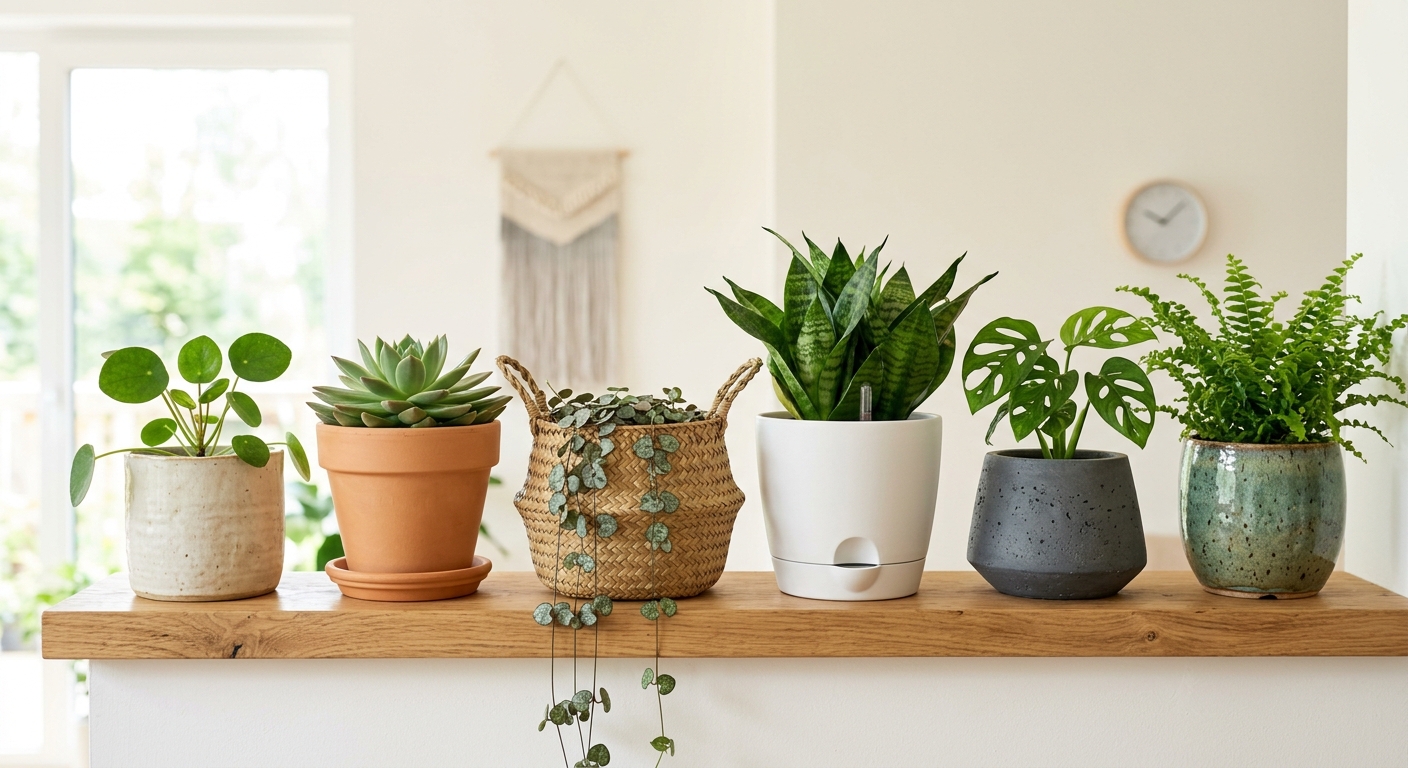
The planter category looks shallow until you actually look — there are real differences in drainage, root health, and watering forgiveness across materials. Self-watering planters reduce care frequency for forgetful owners; fabric grow bags air-prune roots and produce healthier plants; ceramic and terracotta breathe but require attention. This guide picks across each category and surfaces the brands that consistently produce planters that survive years of indoor use.
Pick by material, not by brand
Different planter types serve different needs:
- Self-watering plastic: reservoir at the bottom, wicking action draws water up. Best for: forgetful waterers, frequent travelers, ferns and tropicals that hate drying out.
- Terracotta (unglazed clay): porous, breathes through the walls. Best for: plants that need drier roots (succulents, cacti), forgetful underwaterers actually do better here.
- Glazed ceramic: looks best, but the glaze blocks the porosity benefit. Best for: aesthetic displays where the plant lives in a nursery pot inside.
- Fabric grow bags: air-prune roots (roots stop growing when they hit air at the fabric, branch instead). Best for: edible plants, anywhere root health matters more than aesthetics.
- Wood / concrete / metal: aesthetic specialty. Wood rots over time; concrete is heavy; metal overheats roots in sun. Use as decorative outer pots for nursery liners.
Match planter type to your watering personality. The single biggest reason indoor plants die is overwatering — pick a planter system that forgives your tendencies.
Quick comparison
| Product | Best for | Rating | Notes | |
|---|---|---|---|---|
| Lechuza Classico self-watering | best self-watering indoor planter; premium aesthetic | ★★★★★ | $60-150. German-made. Multi-week reservoir. | Check price |
| Bloomscape Ecopots | best mid-tier self-watering; sustainable materials | ★★★★★ | $40-90. Recycled plastic. Sub-irrigation insert. | Check price |
| Hawthorne Cottage Drain Pots | best ceramic with drainage; gorgeous matte glazes | ★★★★★ | $35-80. Hand-glazed. With saucer. | Check price |
| Bootstrap Farmer 1 Gal Fabric Pots (5-pack) | best fabric grow bags; air-pruning for healthier roots | ★★★★★ | $15-25 for 5. Heavyweight 300g. Reusable. | Check price |
| Mkono Terracotta Planters | best terracotta; classic breathable choice | ★★★★★ | $25-50 for set. Multiple sizes. Saucers included. | Check price |
| Wally Eco Wall Planters | best wall-mounted; vertical garden setup | ★★★★☆ | $25-40 each. Recycled plastic. Modular. | Check price |
| Greenery Unlimited Bergs Potter | best heirloom terracotta; Danish craftsmanship | ★★★★★ | $60-180. Handmade Danish terracotta. Patinas beautifully. | Check price |
The picks
Best self-watering: Lechuza Classico
Best for anyone who has killed a plant from underwatering; frequent travelers
Lechuza Classico Self-Watering Planter
Lechuza is the German brand that effectively created the modern self-watering category. The Classico line includes a removable inner pot, a sub-irrigation system with a wicking insert, a water-level indicator, and a sealed reservoir. Pour water into the side port; the plant draws what it needs over 2-4 weeks. 60-150 dollars depending on size. The 10-inch is the sweet spot for medium tropicals (monstera, fiddle-leaf, peace lily). For users who go on weekend or week-long trips, this is the single biggest plant-care improvement you can make.
★★★★★ 4.8 · 3,800 reviews
Check current price on Amazon→Pros
- Reservoir holds 1-4 weeks of water depending on plant size and conditions
- Water-level indicator removes guesswork — refill when you see "min"
- Inner removable nursery pot makes plant changes simple
- Premium UV-stable polymer; does not yellow or crack over decades of use
- Wide size range from 4-inch tabletop to 28-inch floor planters
Cons
- 60-150 dollars is premium territory; cheaper self-watering options exist (Bloomscape, IKEA) at half the price
- Some plants (succulents, cacti) hate the consistent moisture; only use for tropicals and plants that prefer evenly moist soil
- Initial setup requires a "soak phase" — water the soil from above for 4-6 weeks until roots reach the reservoir
- Cannot be repotted easily once roots establish in the wicking insert
Best mid-tier self-watering: Bloomscape Ecopots
Best for users wanting Lechuza-style function at half the price; sustainability-minded buyers
Bloomscape Ecopots (Self-Watering Insert)
Bloomscape's Ecopots use a sub-irrigation insert similar to Lechuza, made from 80 percent recycled plastic. The aesthetic is more minimal — matte finish in earthy colors. 40-90 dollars depending on size. The trade-offs vs Lechuza: smaller reservoir per dollar, less refined indicator system, fewer size options. For users who do not need the premium German build, this is the value play.
★★★★★ 4.6 · 1,400 reviews
Check current price on Amazon→Best ceramic with drainage: Hawthorne Cottage Drain Pots
Best for aesthetic-driven displays; users who want pottery without the drainage compromise
Hawthorne Cottage Ceramic Planter with Drainage
Most decorative ceramic pots ship without drainage holes — they look beautiful but reliably kill plants from root rot. Hawthorne Cottage (and similar artisan ceramic brands) make pots with proper drainage holes and matching saucers. 35-80 dollars depending on size. The matte glazes look modern; the satin glazes feel more traditional. Bonus: the saucer prevents furniture damage from drainage water.
★★★★★ 4.7 · 1,800 reviews
Check current price on Amazon→Best fabric grow bags: Bootstrap Farmer 1 Gal (5-pack)
Best for serious gardeners; anyone growing edibles indoors
Bootstrap Farmer Heavyweight Fabric Pots
Fabric grow bags revolutionize root health via air-pruning — when roots hit the air at the fabric wall, they stop growing and branch instead of circling. Result: denser, healthier root systems and bigger plant yields. Bootstrap Farmer makes 300g heavyweight fabric (vs the 200g standard), with reinforced handles and machine-washable construction. 15-25 dollars for a 5-pack of 1-gallon bags; 30-50 dollars for larger sizes. The trade-off: they look industrial and need to sit in a saucer or larger decorative pot for indoor use. For edibles, herbs, and serious growing, the root benefit is undeniable.
★★★★★ 4.8 · 4,200 reviews
Check current price on Amazon→Best terracotta: Mkono Terracotta Sets
Best for users with plants that prefer dry roots; succulent and cactus owners
Mkono Terracotta Planter Sets
Terracotta is the original breathable planter material. The porous clay wicks moisture from the soil to the air, preventing overwatering — perfect for succulents, cacti, snake plants, and other dry-loving species. Mkono offers reasonable mass-produced terracotta sets (typically 3-5 pots in graduated sizes) with matching saucers. 25-50 dollars per set. For premium terracotta that develops a patina over years, see Bergs Potter (below). For utility, Mkono is fine.
★★★★★ 4.5 · 5,600 reviews
Check current price on Amazon→Best premium terracotta: Greenery Unlimited Bergs Potter
Best for aesthetic-driven collectors; users wanting heirloom-quality pots
Bergs Potter (Greenery Unlimited)
Bergs Potter is a Danish terracotta brand making handmade pots since 1942. The clay develops a natural patina over years of use, accumulating mineral deposits and lichen-like character. 60-180 dollars depending on size. Functionally similar to mass-produced terracotta (porous, breathable, prevents overwatering); aesthetically a generational upgrade. The pots are sold extensively through Greenery Unlimited's online plant shop in the US.
★★★★★ 4.9 · 620 reviews
Check current price on Amazon→Best wall-mounted: Wally Eco Wall Planters
Best for renters with floor-space constraints; users building living walls
Wally Eco Wall Planters
Wally Eco are pocket-style wall planters made from recycled plastic. Mount in modular grids on any wall to create a living wall feature. 25-40 dollars each; build a 12-pocket wall for under 400 dollars. Built-in moisture barrier prevents wall damage. Best for: ferns, pothos, philodendron, and other trailing varieties. Not suitable for plants needing deep root space.
★★★★☆ 4.4 · 1,100 reviews
Check current price on Amazon→Drainage matters more than material
The single most common cause of houseplant death is overwatering, which roots in pots without drainage cannot escape. Two acceptable solutions:
- Pot with drainage hole + saucer: water flows through; excess collects in saucer; you dump the saucer. Standard practice.
- Nursery pot inside decorative pot (no drainage): keep plant in its plastic nursery pot; lift out to water in the sink; drain fully; replace inside decorative outer pot. Works for any aesthetic ceramic without holes.
What does not work: filling the bottom of a no-drainage pot with rocks “for drainage.” This creates a saturated zone above the rocks where roots rot. Either add proper holes or use the nursery-pot-inside trick.
What to skip
- Sealed decorative pots used as direct planters. Without drainage, plants drown. Use as outer pots only.
- Self-watering planters for succulents/cacti. Constant moisture rots dry-loving species. Self-watering works for tropicals, ferns, herbs, peace lilies.
- Concrete planters indoors. Heavy, eventually crack, leach lime into soil. Use only for very specific dry-loving plants outdoors.
- Hanging planters without proper hardware. Plant + wet soil weighs significantly more than empty pot. Use anchors rated for 25+ pounds.
- Cheap fabric pots under 5 dollars each. Thin 100g fabric tears within one growing season. Bootstrap Farmer’s 300g heavyweight is the bar.
Matching planter to plant type
Quick reference for common indoor plants:
- Monstera, philodendron, pothos: medium-large self-watering or ceramic with drainage. Tropicals love consistent moisture.
- Snake plant, ZZ plant, succulents, cacti: terracotta. They prefer drying between waterings.
- Fiddle-leaf fig: large ceramic with drainage. Hates wet feet but needs room for big roots.
- Ferns: self-watering. Ferns die from drying out faster than any other category.
- Herbs (basil, parsley, mint): fabric pots or terracotta. Edibles benefit from air-pruning; herbs hate wet roots.
- Orchids: clear plastic with drainage. Orchid roots photosynthesize through the pot.
FAQ
Frequently asked questions
Lechuza vs Bloomscape Ecopots — which to pick?
Do I need drainage holes for indoor pots?
Are fabric pots really better than plastic for roots?
How often should I repot indoor plants?
Why do my plants do worse after I repot into a decorative pot?
Are concrete planters safe for indoor plants?
What is the cheapest workable planter for someone just starting out?
Bottom line
Best self-watering: Lechuza Classico. Best mid-tier self-watering: Bloomscape Ecopots. Best ceramic with drainage: Hawthorne Cottage. Best fabric grow bags: Bootstrap Farmer 300g. Best terracotta: Mkono sets. Best premium terracotta: Bergs Potter. Best wall-mounted: Wally Eco.
Match planter type to your watering personality, not to the planter’s looks. The prettiest pot kills the plant if it does not match how you actually water.
For the full setup: grow lights, hydroponics, herb gardens, grow tents, seed starting, or pillar overview.