roundups
Best Indoor Fruiting Plants 2026
Cherry tomatoes, strawberries, dwarf citrus, and peppers all thrive indoors. This guide covers the best indoor fruiting plants and the setups they need.
 Priya Anand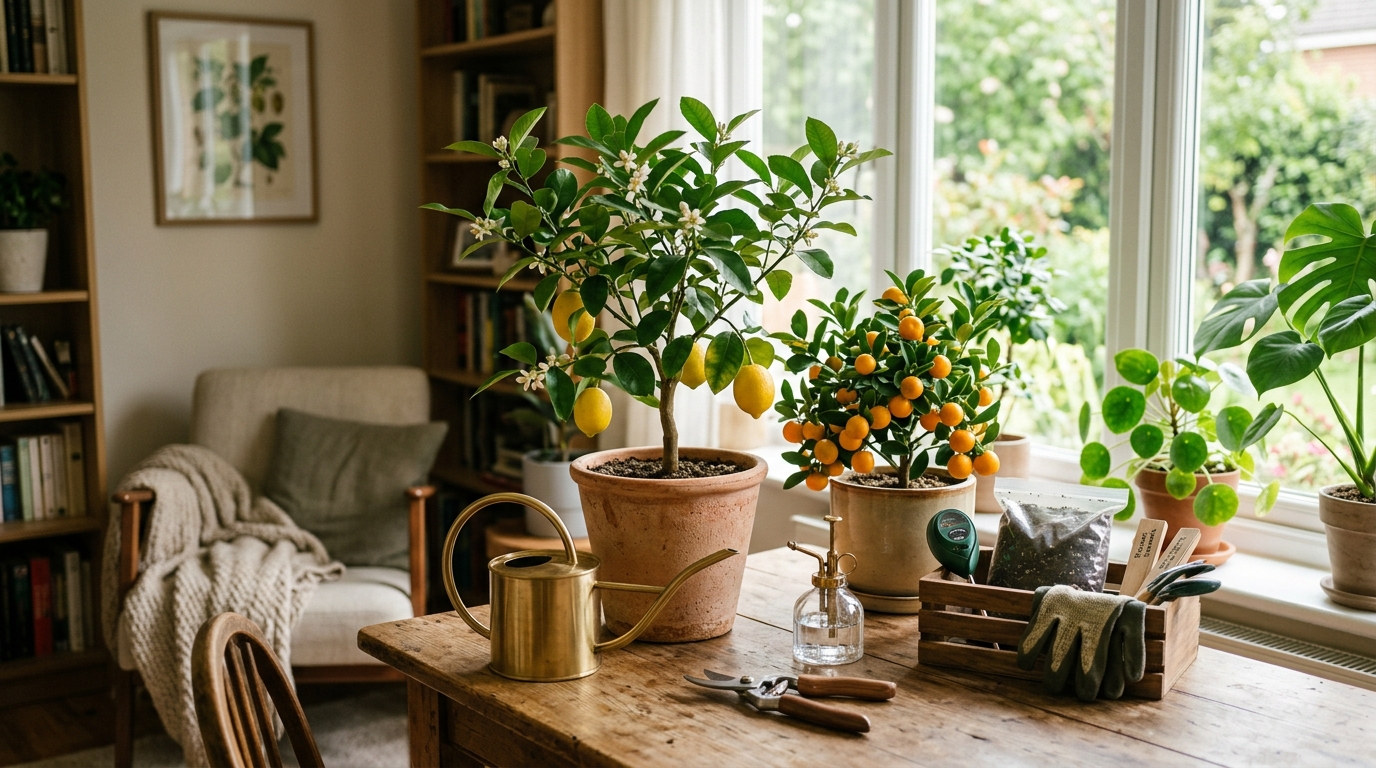
The best indoor fruiting plant for most growers is cherry tomatoes in an AeroGarden Bounty — compact, fast-producing, and fully manageable without natural sunlight. Everbearing strawberries in self-watering containers are the easiest hands-off option for beginners. Hot peppers, dwarf Meyer lemon, and compact fig round out the five plant types that reliably bear edible fruit indoors year-round.
Which fruiting plants actually work indoors?
Not every fruit-bearing plant translates to an indoor setup. The species that succeed share three traits: compact growth habit, tolerance for container growing, and either self-pollination or easy manual pollination. Here is an honest breakdown of what works and why.
Cherry tomatoes produce the highest yield per square foot of any indoor fruiting plant. Compact varieties — Tumbling Tom, Tiny Tim, Red Robin, and AeroGarden Heirloom Cherry pods — stay under 18 inches tall and produce clusters of 1-inch tomatoes from week 8 through month 6 or longer. In a hydroponic system like the AeroGarden Bounty, roots sit directly in nutrient-rich water and grow 30-50% faster than in soil. Flowers are self-pollinating, but running a finger across open blooms or tapping the stem gently several times weekly improves fruit set significantly indoors.
Everbearing strawberries are the best choice for soil-based container growing. Day-neutral varieties — Seascape, Albion, and Tristar are the most reliable — flower and fruit year-round regardless of day length. Unlike June-bearing varieties, which require a day-length trigger and produce only once per season, everbearing types produce continuously when kept at 60-75 degrees F with 12-14 hours of light. A 6-inch self-watering container holds one plant; a window box or hanging basket accommodates four to six plants and produces enough for a weekly topping.
Hot peppers (cayenne, habanero, Thai bird’s eye) are productive indoor plants that double as ornamental fixtures when covered in brightly colored fruit. Peppers tolerate lower light than tomatoes — 12-14 hours of grow light is adequate — and prefer containers in the 3-5 gallon range once established. Harvest time runs 90-120 days from seed. A single established cayenne plant produces 50-100 peppers over a 6-month growing season indoors.
Dwarf Meyer lemon trees are the most popular indoor citrus because Meyer lemons are a natural cross between lemon and mandarin orange — thinner skin, sweeter juice, and more cold-tolerant than true lemons. A 2-3 foot tree in a 10-14 inch container fruits reliably on a south-facing window or under a 150W full-spectrum LED grow light. Flowering is seasonal and intensely fragrant. Fruit takes 6-9 months to ripen from bloom to harvest. The tree is self-pollinating but benefits from manual brush pollination when in bloom.
Compact figs — specifically Petite Negra (also sold as Violette de Bordeaux) — are the most low-maintenance indoor fruiting plant once established. Figs are self-fertile, produce two crops annually, and tolerate container root restriction better than most fruiting trees. A 3-gallon container with a bright south window or supplemental lighting produces ripe figs in summer and a smaller second crop in fall.
Quick comparison
| Product | Best for | Rating | Notes | |
|---|---|---|---|---|
| Cherry Tomatoes (AeroGarden Bounty) | highest yield indoors; hydroponic harvest in 60-70 days | ★★★★★ | AeroGarden Bounty runs $130-170. Tomato pod kit sold separately at $20-35. Produces full clusters from week 8 onward. | Check price |
| Everbearing Strawberry Plants | continuous fruit year-round in containers; beginner-friendly | ★★★★☆ | $15-35 for a 10-25 plant set. Day-neutral varieties fruit without day-length trigger. Compact; fits windowsills. | Check price |
| Indoor Hot Pepper Grow Kit | ornamental and edible; tolerates slightly lower light than tomatoes | ★★★★☆ | $15-40 for kit with seeds and growing medium. Single plant produces 50-100 peppers in a 6-month indoor season. | Check price |
| Dwarf Meyer Lemon Tree | best indoor citrus; fragrant blooms and sweet-tart fruit | ★★★★☆ | $35-80 for a 2-3 ft potted tree. Fruits on a bright south window or 150W grow light. Harvest 6-9 months after bloom. | Check price |
| Petite Negra Fig Tree | lowest maintenance indoor fruiting tree; no pollinator needed | ★★★★☆ | $30-65 for a small potted tree. Two crops per year. Self-fertile and tolerates root restriction in containers well. | Check price |
The picks
Best overall: Cherry Tomatoes in the AeroGarden Bounty
Best for growers who want the highest indoor fruit yield without natural sunlight — full tomato clusters in under 10 weeks
AeroGarden Bounty 9-Pod with Tomato Seed Kit
Cherry tomatoes in the AeroGarden Bounty produce more edible fruit per square foot than any other indoor fruiting setup. The 24-inch adjustable arm accommodates full-sized cherry tomato plants as they climb; the 9-pod reservoir gives each plant consistent nutrient delivery on a two-week schedule. AeroGarden sells a dedicated Heirloom Cherry Tomato seed pod kit that includes Tumbling Tom and Mighty Cherry varieties — both compact enough to stay within arm height at peak production. Pollination indoors is simple: shake the main stem gently three times per week when flowers are open. Expect first ripe fruit at 60-70 days from planting; a healthy plant runs 4-6 months before needing replacement. The Bounty runs $130-170 for the unit; the tomato pod kit adds $20-35 — total setup cost is $150-200, comparable to a season of quality tomatoes at grocery prices for a regular buyer. Grow light runs automatically on a 16-hour timer, water needs topping every 1-2 weeks, and nutrients go in every two weeks. No sunlight required at any stage.
★★★★★ 4.6 · 8,400 reviews
Check current price on Amazon→Pros
- Highest indoor fruit yield of any method — full cherry tomato clusters from week 8 through month 6
- 24-inch adjustable arm gives plants room to grow to full production height without hitting the light
- No sunlight needed — works on any kitchen or living room counter regardless of window exposure
- Hydroponic nutrient delivery produces tomatoes 30-50% faster than soil containers under equivalent light
- Automatic 16-hour grow light timer eliminates any lighting guesswork for the entire growing cycle
- AeroGarden Heirloom Cherry Tomato pod kit includes Tumbling Tom and Mighty Cherry — both proven compact varieties
Cons
- Tomato plants require manual pollination indoors — shake the stem gently several times per week when flowers are open
- Tomato pod kits run $20-35 and are proprietary — standard seed packets cannot be used directly without an adapter
- Vigorous tomato vines need training and pruning every 1-2 weeks to stay within the arm clearance
- Unit footprint is roughly 11 by 17 inches — larger than a countertop herb garden and needs dedicated counter space
Best for beginners: Everbearing Strawberry Plants
Best for beginners who want continuous fruit year-round in a container without complex growing systems or nutrient measuring
Everbearing Strawberry Plants — Day-Neutral Varieties
Day-neutral everbearing strawberry varieties — Seascape, Albion, and Tristar are the most widely available — produce fruit throughout the year at temperatures between 60 and 75 degrees Fahrenheit regardless of day length. No seasonal dormancy period, no day-length trigger, and no waiting for a once-annual June harvest. A single plant in a 6-inch self-watering container produces 8-16 strawberries per month during active growth; four to six plants in a window box or hanging basket produce enough for a consistent weekly topping. Bare-root starter plants are available in sets of 10-25 for $15-35, making this one of the lowest-cost entries to indoor fruiting. The primary light requirement is 12-14 hours daily from a south window or grow light. Runners are a bonus: each plant produces 4-8 runners annually that root easily in adjacent pots, giving a self-perpetuating supply of new plants at zero cost. No pollinator is required — strawberry flowers are self-fertile and pollinate in a light indoor breeze or with a gentle brush pass.
★★★★☆ 4.3 · 3,200 reviews
Check current price on Amazon→Pros
- Day-neutral varieties produce fruit year-round without seasonal dormancy or a day-length trigger
- Self-fertile flowers need only a light breeze or brush pass — no bees or complex manual pollination required
- Low entry cost at $15-35 for a 10-25 plant set of bare-root starters
- Runners produce 4-8 free replacement plants per year — the supply is self-replenishing at no added cost
- Compact growth habit fits window boxes, hanging baskets, and 6-inch containers on any windowsill
- Tolerates 12-14 hours of grow light without burning — forgiving for beginner light management
Cons
- Bare-root plants take 4-6 weeks to establish before flowering begins — less immediate than tomato pod kits
- Production per plant is modest — 8-16 berries per month — so multiple plants are needed for meaningful harvests
- Day-neutral varieties are not the largest or sweetest strawberries; June-bearing types taste better but only fruit once annually
- Runners need pruning or re-potting every few months to prevent the planting area from becoming overcrowded
Best flavor-to-space ratio: Indoor Hot Peppers
Best for growers who want a productive and ornamental fruiting plant that tolerates lower light than tomatoes
Indoor Hot Pepper Grow Kit
Hot peppers are underrated as indoor fruiting plants. A single established cayenne or Thai bird's eye plant in a 3-5 gallon container produces 50-100 peppers over a 6-month season — far more than most home cooks use — and the bright red, orange, or yellow fruit on the plant is genuinely ornamental. Peppers require 12-14 hours of grow light daily, which is slightly less demanding than cherry tomatoes, and prefer warm temperatures of 70-80 degrees Fahrenheit with humidity in the 50-70% range. Seed-to-harvest takes 90-120 days, which is longer than cherry tomatoes, but the plant life is longer as well — pepper plants overwinter indoors and fruit for 2-3 seasons with proper care. Indoor hot pepper grow kits include seeds, growing medium, and small starter pots in a single package, which simplifies the first growing cycle. Varieties well suited to containers include cayenne, habanero, serrano, and Thai bird's eye — all compact enough to stay under 18-24 inches indoors with standard pruning.
★★★★☆ 4.2 · 2,100 reviews
Check current price on Amazon→Pros
- Single plant produces 50-100 peppers per 6-month season — very high yield relative to plant size and counter footprint
- Brightly colored fruit is ornamental as well as edible — attractive on any windowsill or kitchen counter
- Tolerates 12-14 hours of grow light — slightly less light-demanding than cherry tomatoes
- Pepper plants overwinter indoors and fruit for 2-3 seasons with basic pruning and feeding
- Self-pollinating flowers need only gentle stem tapping or fan-induced air movement indoors
Cons
- Seed to first harvest runs 90-120 days — the longest initial wait of any plant in this roundup
- Warm temperatures and 50-70% humidity are required — a dry apartment in winter can cause flower drop
- High-heat varieties (habanero, ghost pepper) produce more fruit than most households consume; cayenne or serrano are more practical
- Plants need repotting to a 3-5 gallon container at 60 days — starter kits include small pots that restrict root growth long-term
Best indoor citrus: Dwarf Meyer Lemon Tree
Best for growers who want fragrant citrus blossoms and harvestable lemons on a sunny windowsill or under a 150W grow light
Dwarf Meyer Lemon Tree (2-3 ft Potted)
Dwarf Meyer lemon is the most reliable indoor citrus because Meyer lemons are a hybrid with mandarin orange — giving the fruit thinner skin, lower acidity, and more cold tolerance than Eureka or Lisbon lemons. A grafted 2-3 foot tree in a 10-14 inch container fruits on a south-facing window delivering 6-8 hours of direct sun or under a 150W-plus full-spectrum LED grow light running 14-16 hours daily. Blooming typically occurs once or twice annually and the white flowers are intensely fragrant. Fruit takes 6-9 months to ripen from bloom to harvest — the tree carries ornamental green fruit for several months before it yellows and ripens. Manual pollination with a small artist brush is recommended: transfer pollen between open flowers over 2-3 days when blooming. A single grafted tree produces 6-12 lemons per year in an optimal indoor setup — meaningful output for a tree that lives 10-plus years with basic care and biannual repotting.
★★★★☆ 4.4 · 2,800 reviews
Check current price on Amazon→Pros
- Meyer lemons are sweeter and lower in acid than grocery lemons — noticeably better flavor for cooking and drinks
- Fragrant white blossoms are a seasonal household feature — among the best-smelling indoor plants available
- Grafted trees fruit at 1-2 years old; seed-grown trees take 3-5 years to produce (always buy grafted)
- One tree lives 10-plus years with basic repotting every 2-3 years into a slightly larger container
- Fruit holds on the tree for months after ripening, giving a flexible and unhurried harvest window
Cons
- Fruit takes 6-9 months from bloom to ripe — one of the longest wait times of any indoor fruiting plant
- Requires 6-8 hours of direct sun or a 150W-plus grow light — demanding light requirements for indoor setups
- Manual pollination with a brush is needed indoors — bees do not access indoor trees in bloom
- Spider mites and scale insects are common on indoor citrus; monthly inspection and occasional neem oil treatment is standard maintenance
Best low-maintenance option: Petite Negra Fig Tree
Best for growers who want a self-fertile indoor fruiting tree with minimal active maintenance once established
Petite Negra Fig Tree (Violette de Bordeaux)
Petite Negra (also sold as Violette de Bordeaux) is the most compact and container-friendly fruiting fig variety available. The tree stays under 4 feet in a 3-5 gallon container and produces two crops annually: a smaller breba crop in early summer from buds on the prior year growth, and the main crop in late summer and fall. The fruit is small — 1-2 inch diameter — but intensely sweet and fully ripe off the tree, which is a noticeably different experience from gas-ripened grocery store figs. Figs are self-fertile: no pollination mechanism is needed for fruit set. The tree tolerates root restriction well, meaning the same container works for 2-3 years before repotting. Light requirements are real but achievable: a bright south window or a 100W full-spectrum LED for 12-14 hours daily. After leaf drop in winter, move it to a cool garage or basement for 8-12 weeks of dormancy, then return it to the light. The dormancy cycle triggers a strong breba crop the following spring. No pest management is required if the tree stays isolated from other houseplants.
★★★★☆ 4.2 · 1,900 reviews
Check current price on Amazon→Pros
- Self-fertile with no pollination mechanism needed — no brush, no manual transfer, no wasps or bees required
- Two fruiting crops per year (breba in early summer, main crop in late summer and fall)
- Tolerates container root restriction for 2-3 years between repottings — low repotting frequency vs citrus
- No pest management needed indoors when kept isolated — no fig beetles or fig wasps in a home environment
- Intensely sweet small figs with far better flavor than grocery store fruit harvested unripe
Cons
- Requires 8-12 weeks of winter dormancy in a cool dark location each year — the one active management step needed annually
- Two crops produce relatively modest total fruit volume — less prolific than cherry tomatoes or peppers per season
- Dormancy can look like a dying plant to new growers — leaf drop in fall is normal and expected
- Slow to establish in the first year; full production does not typically appear until year two indoors
What to skip
Full-size tomato varieties indoors. Beefsteak, Big Boy, and other standard slicing tomatoes need root volume, plant spacing, and light intensity that no indoor setup can adequately provide. Plants will grow but fruit yield and size will disappoint. Stick to Tumbling Tom, Tiny Tim, Mighty Cherry, and similar compact varieties bred for container production.
Watermelon, squash, and cucumber indoors. Vine crops need large root volumes (5-15 gallons per plant), aggressive pollination, and sustained light intensity above what standard grow lights provide for 8-12 hours daily. The fruit-to-effort ratio is poor compared to cherry tomatoes or peppers in the same footprint.
Avocado trees grown from pits. Pit-grown avocado trees are not grafted and can take 10-15 years to produce fruit — if they produce at all. A grafted dwarf avocado tree can fruit in 3-5 years, but the tree size (6-8 feet at maturity) and light requirements make it impractical for most indoor setups. If you want avocado as a foliage plant with no fruit expectations, a pit-grown tree is a fine and free houseplant.
Fruiting plants without a grow light in a low-light apartment. Fruiting — tomatoes, peppers, strawberries, citrus — requires significantly more light energy than foliage production. A north-facing window produces no usable light for fruiting plants. East- or west-facing windows produce marginal results at best for tomatoes and citrus. If your space lacks a bright south window with 6-plus hours of direct sun, a grow light is not optional — it is the minimum threshold for reliable fruit production.
FAQ
Frequently asked questions
What is the easiest fruiting plant to grow indoors?
Do indoor fruiting plants need pollination?
How many hours of light do indoor fruiting plants need?
Can you grow cherry tomatoes indoors year-round?
How long until indoor fruiting plants produce fruit?
What container size do indoor fruiting plants need?
Bottom line
Cherry tomatoes in the AeroGarden Bounty are the best indoor fruiting setup for growers who want meaningful harvest volume — full clusters of ripe tomatoes in under 10 weeks without a single window of natural light. Everbearing strawberries in self-watering containers are the easiest entry point for beginners who want continuous fruit production without any complex system or liquid nutrients to manage.
Hot peppers deliver the best yield-to-space ratio: a single plant produces more fruit than most households can use in a season and doubles as an attractive ornamental fixture. Dwarf Meyer lemon delivers seasonal fragrant blooms and genuine lemon harvests on a strong south window or a 150W grow light — the most rewarding long-term indoor tree. Petite Negra fig is the pick for hands-off growers: give it light, follow the annual dormancy cycle, and it produces two crops per year with minimal active attention.
Related reading: how to grow cherry tomatoes indoors for a step-by-step tomato setup guide, best hydroponic systems for scaling beyond a countertop unit, how to grow strawberries indoors for a full container strawberry guide, and best grow lights for supplemental lighting that makes indoor fruiting possible in any room.